




GNA Awana BioPark: Balancing Preservation, Conservation and Bio-Tourism
Beyond the bustle of Genting Highlands lies a world where the pace slows and the forest speaks.
This is Awana BioPark, managed by Genting Nature Adventures (GNA). Awana BioPark is not merely a green escape but a living, growing laboratory where science, conservation, and responsible tourism intertwine. Here, scientists, rangers, academicians, photographers, and the common person work together to ensure this precious montane ecosystem continues to thrive for the next generation.

Unlike destinations that simply showcase biodiversity, Awana BioPark exemplifies effort, which is visible in every trail carefully laid, every slope restored, and every programme designed to build awareness. Here, bio-tourism is more than just a concept. It is an ongoing practice which integrates scientific learning, environmental responsibility, and public engagement, built on the foundations of knowledge, care for nature, and community collaboration.
Four Pillars of Stewardship
GNA is guided by four core pillars: Conservation, Preservation, Sustainability, and Education. Together, they shape how Awana BioPark is protected, managed, and shared with the public.
Conservation focuses on protecting rare and endangered species.
Preservation safeguards natural areas from harm.
Sustainability ensures the environment’s long-term health.
Education makes biodiversity accessible to everyone.
Together, these pillars create a holistic approach that balances eco-tourism with environmental responsibility.
Science in Action
Conservation is more than a philosophy at GNA; it is a daily practice. Awana BioPark spans 1,000 acres of Upper Dipterocarp Forest, where rare orchids and carnivorous pitcher plants grow alongside towering timber trees. Wildlife like siamangs, dusky leaf monkeys, and the elusive Malayan serow call this forest home.
Advancing Primate Research with Prof. Dr. Badrul (UKM)
GNA works closely with Prof. Dr. Badrul Munir Md Zain, a leading authority in primatology and molecular systematics. Their collaboration stretches back to 1999, when Prof. Badrul first met Eddie Chan, GNA’s Department Manager, who had already been mapping siamang groups in the Genting forest. That encounter developed into a lasting partnership that combines academic expertise with on-the-ground conservation work.

Prof. Badrul and his team from Universiti Kebangsaan Malaysia (UKM) employ techniques such as faecal sampling to analyse the genetic health, diet, and habitat of siamangs and other primates in the area. This approach ensures that rigorous scientific data is gathered without disturbing the animals, while also offering valuable insights into their behaviour, movement patterns, and interactions within mixed-species groups. These findings help GNA refine its protection strategies, from patrolling and habitat management to shaping visitor activities that minimise ecological disturbance.
Beyond field research, this collaboration also focuses on education and public engagement. Prof. Dr. Badrul plays a key role in developing interpretive trails, talks, and learning modules that translate complex science into accessible knowledge for visitors. His expertise feeds directly into the GNA School for Primates with Prof. Dr. Badrul, where schools, universities, and nature enthusiasts are invited to learn about primate behaviour, genetics, and conservation through hands-on experiences. Students may join guided outings to observe siamangs in their natural setting, take part in field surveys, or gain exposure to the methods used in ecological research.

The impact of this collaboration is twofold. On one level, it strengthens scientific understanding of primate populations in Genting Highlands through UKM’s academic rigour. On another, it empowers the public to connect with conservation in meaningful ways, whether through guided programmes, educational workshops, or interpretive materials.
Together, GNA and Prof. Dr. Badrul exhibit how science, education, and knowledge-tourism can work hand in hand, ensuring that the protection of Genting’s primates is not just a research endeavour but also a community mission.
Exploring Genting’s Botanical Treasures
The montane forests of Genting are a sanctuary of rare and beautiful plant species, many of which are little known to the public. Since 2006, Prof. Dr. Rusea Go of Universiti Putra Malaysia (UPM) has been working alongside GNA to study, document, and protect these delicate ecosystems.

Through this collaboration, hundreds of native plants have been identified, including orchids such as Paphiopedilum lowii and the enchanting Hymenorchis javanica. These findings highlight the unique biodiversity of Awana BioPark, positioning Genting Highlands as an invaluable site for conservation and ecological research.
The GNA School for Wild Flora with Prof. Dr. Rusea Go serves as a link between academic research and public education. Prof. Rusea transforms her botanical expertise into engaging learning experiences for visitors. Along guided eco-walks, participants not only see rare, wild flowers up close, but also learn about their ecological importance and the threats they face in today’s changing climate.
Beyond the four classroom walls, the GNA School for Wild Flora with Prof. Dr. Rusea Go is an ever-growing archive of Genting’s botanical wealth, created through years of partnership, passion, and the belief that protecting wild flora is essential to protecting life itself.
The Hidden Jewel Beneath the Forest Floor
In the depths of Genting’s rainforest lies a flower so elusive that most people will never see it in their lifetime. Named Thismia limkokthayi, this tiny, otherworldly plant lives underground and surfaces only briefly. Its story might have remained untold if not for the collaboration between GNA and Siti Munirah Mat Yunoh, a senior botanist from the Forest Research Institute Malaysia (FRIM).

When GNA Department Manager Eddie Chan first spotted the unusual specimen near Clearwater Way, it sparked a journey of scientific discovery. With the help of Siti Munirah and her colleague Suhaida M., the plant was formally identified as a new species: one found only in Chin Swee BioPark. For conservationists, this wasn’t just another academic milestone. It was a reminder that the forest shelters rare, fragile life forms, many of which remain hidden from plain sight.

To bring this discovery beyond the realm of science, GNA established the GNA School for Thismia limkokthayi with Siti Munirah. Here, the plant becomes a teacher, offering lessons on biodiversity, resilience, and the mysteries of the natural world. Visitors and students are invited to explore its story through interactive sessions, interpretive walks, and carefully curated knowledge-sharing activities that reveal why a flower so small can carry such big meaning.
This partnership illustrates that conservation is not only about saving what we already know but also about uncovering what we have yet to understand. By working with experts like Siti Munirah and her colleagues at FRIM, GNA turns a hidden jewel of the forest into a beacon for public learning, one that inspires people to look closer, listen deeper, and recognise that the forest holds wonders well beyond the obvious.
Working Together to Protect Wildlife
At Awana BioPark, protecting wildlife is a responsibility carried out through a strong partnership between GNA and the Department of Wildlife and National Parks Peninsular Malaysia (PERHILITAN). This collaboration combines science, enforcement, and education to ensure that the forest’s fragile balance is maintained while creating learning opportunities for the public.
One of the key initiatives is the annual wildlife inventory, where camera traps are set up across the forest. These hidden lenses have recorded everything from the shy Malayan serow to the rarely seen black panther. The images and data not only guide conservation strategies but also ignite curiosity among visitors and school groups who are shown glimpses of the forest’s hidden life.

A dedicated Community Ranger base has also been established inside the BioPark. From this hub, rangers conduct preventive patrols to guard against poaching and encroachment, maintain and monitor camera trap stations, and compile detailed records of wildlife sightings. Their role also includes conducting awareness sessions at the Biodiversity, Education, Research, Sustainability and Visitor Centre (BERSVC) and presenting findings at the Conference of Experts and Collaborators (CoEC), ensuring that conservation knowledge is shared widely with communities, researchers, and policymakers.
This partnership also works to foster harmony between people and nature. Visitors are reminded not to feed animals such as siamangs and monkeys, as it alters their natural behaviour and leads to unhealthy dependence. Through talks, guided tours, and educational signage along trails, the public learns why small actions matter in protecting the larger ecosystem.
In addition, GNA and PERHILITAN regularly involve schools, universities, and volunteer groups in conservation activities. From guided biodiversity walks to reforestation projects, participants experience firsthand how protection efforts are carried out. These encounters leave a lasting impression, inspiring future conservationists and nurturing a culture of environmental respect.
The GNA School for Wildlife Conservation with PERHILITAN Malaysia reflects this spirit of collaboration. It shows that safeguarding wildlife is not just the work of scientists and rangers, but a collective effort that includes students, communities, and everyday visitors who choose to walk the trails responsibly.
Hiking with Purpose
The name Ravi Everest (Ravichandran Tharumalingam) is synonymous with grit and achievement, but his work with GNA shows another side of him, one that is about guidance, respect, and care for the natural world. Together, they have created the GNA School for Hiking with Ravi Everest, a programme that turns every trek into an opportunity for awareness and connection.

The school does more than teach hikers how to walk trails. It instils the habits of responsible trekking: preparation, safety, navigation, and above all, leaving no trace. Ravi draws on his experiences from the Himalayas to remind participants that strength in the wild is not measured by how much we take from it, but by how lightly we pass through.
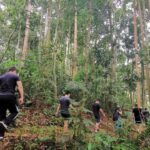
On these guided hikes, participants gain a new perspective on Genting Highlands’ landscapes. A slope is not just a climb, but part of a fragile ecosystem. A stream is not simply water to cross, but a lifeline for countless species. The lessons emerge naturally with every step, blending the thrill of discovery with a growing sense of responsibility.
Through this collaboration, GNA and Ravi Everest give hiking a renewed purpose. It is no longer only about reaching a peak, but about walking with awareness, while understanding that each step has the power to protect or to harm.
Nature, Healing, and Heritage
When Dr. Clement Ng Shin Kiat, a respected Traditional Chinese Medicine (TCM) practitioner and President of the Singapore Acupuncture Association, first visited Awana BioPark with his family, he saw the park’s potential to connect health, heritage, and nature in a way few places can. That visit set in motion a collaboration with GNA that continues to grow today.
At GNA’s Conference of Experts and Collaborators in March 2025, Dr. Clement shared his insights through a talk titled “Nature as Medicine – The Interdependence of Biodiversity and Traditional Chinese Medicine.” His message was clear: the forests that GNA protects are not only habitats for wildlife but also living reservoirs of healing knowledge. Each plant, herb, and root carries centuries of cultural wisdom, reminding us that preserving biodiversity also means preserving medicine for the future.

Through this partnership, GNA has been able to expand its educational scope. Visitors are now encouraged to look at the forest not just as a collection of trees, but as part of a larger story about human health. Interpretive sessions and guided activities help people appreciate how native plants can support wellness, while also highlighting the importance of sustainable use.
Dr. Clement’s collaboration with GNA shows that conservation and healing share the same foundation: respect for nature. By linking traditional wisdom with modern science, this partnership inspires people to see the forest not only as a haven for wildlife but also a source of well-being for humanity.
Creativity Inspired by the Forest
The partnership with Karen & Chow of Quilljoy Endeavours adds a new dimension to the experience of the highlands. Instead of only walking through the forest, visitors are encouraged to pause, create, and capture the beauty of nature in ways that last far beyond the trails.

Karen & Chow first came together with GNA to design a children’s nature journal logbook; a simple yet powerful tool that invites young explorers to write, draw, and reflect on their discoveries in the park. What began as a book soon grew into workshops, where papercraft and quill art became meaningful ways for participants to turn leaves, textures, and forest inspirations into handmade souvenirs.

Building on this, the collaboration has evolved into the GNA School for Quill Art with Karen & Chow. This programme goes beyond craft-making. It is a guided practice of looking closer at nature and transforming those observations into creative expressions. From sketching along the trails to carefully assembling paper designs in a workshop, every step is an act of slowing down and reconnecting with the environment.

Through Quilljoy’s artistic touch, GNA shows that sustainability and education are not limited to science and conservation. They can also take form in creativity, where art becomes a bridge between people and nature.
Cultivating Care Through Green Action
The collaboration between GNA and Woon Kean Sim has turned Green Bonding into a meaningful experience that goes beyond the usual corporate retreat. With Woon’s guidance, the programme blends environmental action with hands-on learning, creating a space where people connect with nature while also strengthening bonds with one another.
Green Bonding isn’t just about planting trees. Under Woon’s approach, it combines interactive simulations, habitat restoration, and guided appreciation walks through the forest. Participants are encouraged to think deeply about how ecosystems function and why every small action, like planting the right mix of native species on a slope or pausing to observe forest life, makes a difference.

One of the highlights is the “Growing Verges” activity, where participants restore degraded slope edges with carefully chosen plants. These verges act as natural corridors that support wildlife such as siamangs, forest birds, and monkeys. It’s an effort designed for long-term ecological benefit, not just a symbolic gesture.
Between 2024 and 2025, more than 3,000 participants from almost 60 companies planted over 3,000 trees to create wildlife corridors while nurturing a culture of environmental stewardship in corporate Malaysia.

This collaboration takes shape in the GNA School for Green Bonding with Woon. The school provides a structured way to integrate green practices into group experiences, ensuring that every activity, whether a planting session, a team challenge, or a reflective walk, contributes to deeper awareness of sustainability.
Protecting While Sharing
Preservation does not mean shutting people out of nature. Instead, it is about responsible access. Trails such as Awana and Clearwater Way are designed to avoid cutting through trees, maintaining ecological continuity while minimising landslide risks. Cemented pathways, modest yet effective, withstand heavy rainfall, reducing the need for frequent repairs that could disrupt wildlife.
Seed-trapping bunds placed along trails capture dipterocarp seeds, nurturing them into seedlings that are later transplanted into degraded areas. This is a form of natural regeneration that doubles as a genetic bank for the forest. Meanwhile, rules like the park’s strict no-litter policy and prohibitions on unauthorised plant or animal collection preserve soil health and water quality. This way, GNA balances preservation with meaningful visitor experiences.
A Real-World Model of Bio-Tourism
What truly sets Awana BioPark apart is how it makes sustainability part of its DNA. Electric buggies replace noisy vehicles, reducing emissions while making trails peaceful for wildlife. Accessibility is also prioritised, with pathways designed for wheelchairs and prams, ensuring families, seniors, and people with reduced mobility can equally enjoy nature.
Just as important as the land are the people. GNA has brought in a team of young scientists who contribute to ecological monitoring, research, and planning. They are gaining the experience and passion needed to become tomorrow’s leaders in tackling biodiversity loss and climate change.
Turning Visitors into Learners
Perhaps the most transformative part of GNA’s work is education. The goal is not just to welcome visitors, but to inspire them. At the Biodiversity, Education, Research, Sustainability, and Visitor Centre (BERSVC), more than 30,000 participants have taken part in biodiversity programmes, from schoolchildren and families to researchers and academics.

Collaboration makes education dynamic. In partnership with Nikon, through Futuromic Photo AV Sdn. Bhd., GNA brings together science, art, and adventure to create meaningful experiences. The collaboration includes bird inventories and surveys, a practice that not only contributes to ecological knowledge but also inspires a deeper respect for biodiversity. Purpose-built bird-watching ports allow Nikon users and enthusiasts to experience these moments up close, transforming the BioPark into a live classroom for both nature and photography.

The initiative extends into education. Schools and universities are regularly invited to join guided outings, where young people are encouraged to observe, document, and appreciate the natural world. For instance, during a recent school programme, students were thrilled to capture the graceful flight of a hornbill, an image that became a symbol of their growing environmental awareness. Photography clubs, too, are engaged with curated field sessions, such as a weekend macro-photography retreat that drew hobbyists eager to capture rare flowers and insects in their natural setting.

To make the experience even more accessible, guests of Resorts World Awana can participate in photography classes led by Nikon experts, turning leisure into discovery. Whether it is a family trying their hand at wildlife shots or a traveller capturing the serenity of the rainforest, every session becomes an opportunity to learn, connect, and share stories through images.
Exploring Forests Smarter
GNA is redefining how visitors experience the forest, thanks to its collaboration with Won Yee How, the mind behind the SmartForest mobile app. This partnership weaves together the gap between technology and nature, turning each trail into a digital learning journey.
The SmartForest app allows visitors to scan trees, plants and animals along the trails, instantly accessing information about species, their habits, and ecological importance. This approach encourages curiosity, observation, and reflection, making every walk not just a hike, but an interactive exploration. Won emphasises that when people engage actively, they notice details, ask questions, and develop a deeper connection to the forest.

To further structure this engagement, GNA has launched the GNA School for SmartForest with Won. Participants are guided in using the app as a tool to identify species, understand ecological relationships, and appreciate the forest’s complexity. The programme turns learning into an experience, combining digital tools with on-ground observation, and inspiring visitors to care for the natural world.
Through this collaboration, GNA highlights that technology and conservation can go hand in hand. By blending smart tools with forest exploration through a visual recognition mobile app, GNA and Won create immersive experiences that educate, inspire, and foster a sense of responsibility for the forest, ensuring its protection for the future.
Discovering the Forest’s Tiny Insects
At Genting Highlands, even the tiniest creatures have a story to tell. Through GNA’s partnership with Sato-san, an expert in entomology, GNA has established the GNA School for Insects with Sato-san, a programme dedicated to exploring the crucial role insects play in sustaining forest life.

Participants are guided along trails to observe, identify, and understand insects, from pollinators to decomposers, and learn how each species contributes to the health and balance of the ecosystem. Sato-san’s expertise turns these often-overlooked creatures into captivating subjects, helping visitors see the forest through a new lens of wonder and appreciation.
Conservation is not just about protecting large animals or trees but also about recognising and safeguarding the smallest, often unseen architects of the forest. By engaging visitors in hands-on exploration and discovery, GNA and Sato-san foster curiosity, environmental awareness, and a deeper commitment to preserving the natural world.
Cultivating Tomorrow’s Conservationists
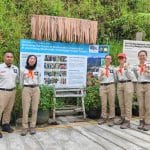
At GNA, the future of conservation is being shaped by young minds through the GNA School for Young Pioneers for Nature with GNA BioPark Rangers. This initiative, launched in 2024, aims to nurture budding scientists and future guardians of our natural world.

The programme offers immersive experiences where children engage directly with the environment, guided by the knowledgeable GNA BioPark Rangers. Through hands-on activities and explorations, participants learn about biodiversity, ecosystem dynamics, and the importance of conservation efforts.

One of the standout aspects of this collaboration is the involvement of young pioneers like Ziann Kok, Ho Hayley, and Won Dao Her. These young eco-enthusiasts have taken on roles as Junior Rangers, leading by example and inspiring their peers with their passion for nature.

Through this partnership, GNA and the Young Pioneers for Nature programme are laying the groundwork for a generation that values and actively contributes to the preservation of our natural heritage.
The Forest’s Unique Lifeforms
GNA invites visitors to uncover the wonders of pitcher plants and reptiles through its Department Manager, Eddie Chan, a dedicated conservationist. This partnership forms the basis of the GNA School for Nepenthes and Herpetofauna with Eddie Chan, a programme that brings the region’s unique flora and fauna to life.
Participants are guided through the forest to observe Nepenthes species in their natural habitats, learning about their carnivorous mechanisms and ecological roles. Alongside this, attendees explore local herpetofauna, from colourful lizards to elusive snakes, gaining insights into their behaviours and importance within the ecosystem.

The school combines hands-on exploration with expert knowledge, fostering a deeper understanding of these species and encouraging responsible stewardship. By showcasing the intricate connections between plants and reptiles, GNA and Eddie Chan highlight the value of preserving these habitats, ensuring that future generations can continue to marvel at their ecological significance.
Towards Awareness One Step At a Time
With visitor numbers to Genting Highlands projected to reach 53 million annually by 2030, the role of Awana BioPark grows ever more critical. GNA aims to guide one million visitors each year along its carefully managed trails, where each step becomes part of an educational journey. By weaving together science, education, and eco-tourism at Awana BioPark, GNA demonstrates that nature flourishes when people care to understand it.