


Craftsman Premkumar Francis Xavier: Devotion, One Kavadi at a Time
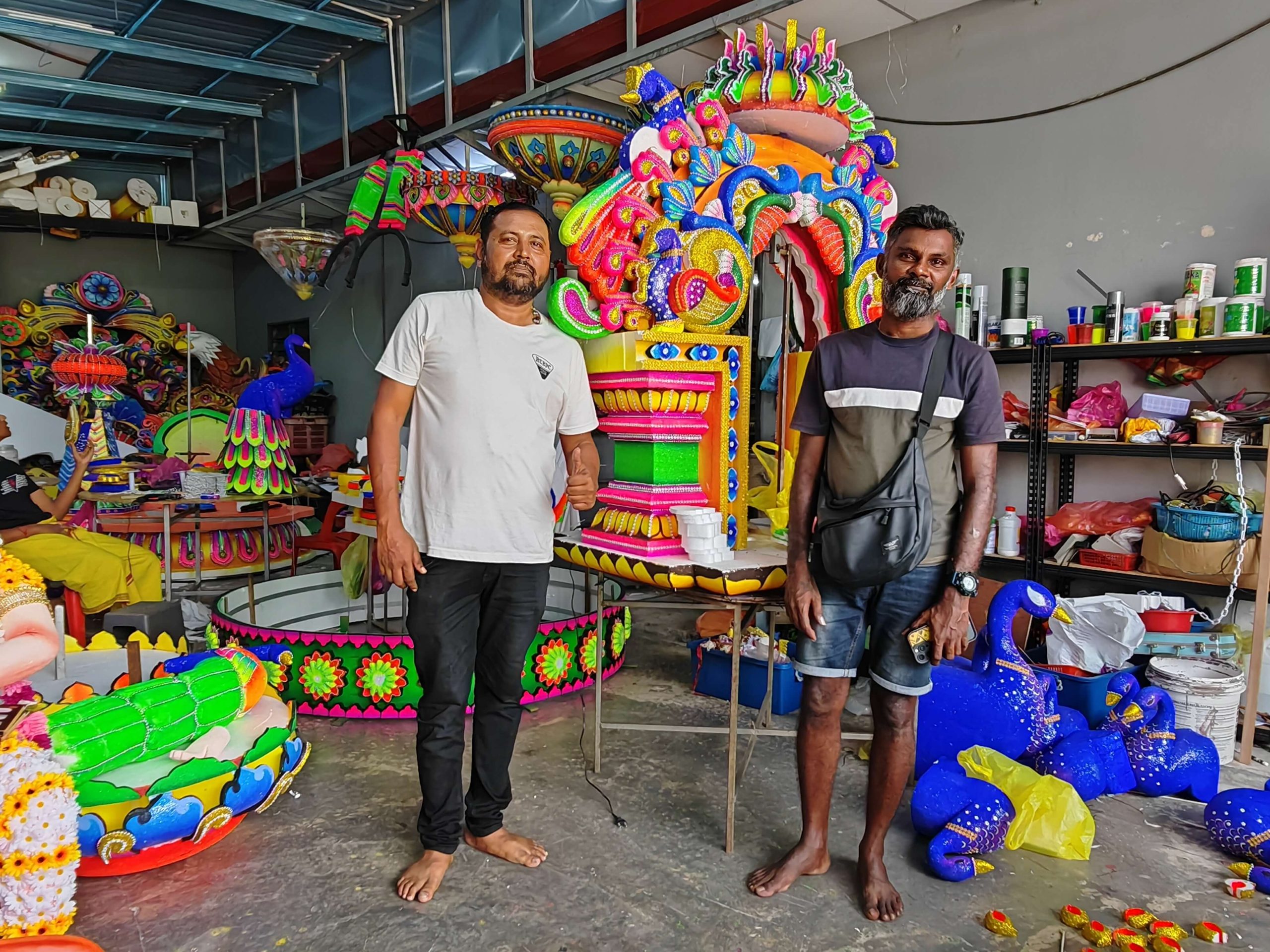
In a modest workshop in Buntong, Ipoh, devotion takes physical form. Sheets of styrofoam are cut, shaped, coloured, and refined, not as mass-produced objects, but as sacred expressions of faith. At the centre of this painstaking process is Premkumar Francis Xavier, a kavadi craftsman whose work has quietly supported Hindu devotees for more than two decades.

At 40 years old, Prem is already a veteran in a craft that demands patience, precision, and spiritual sensitivity. While many see the kavadi only during Thaipusam, Prem knows that its significance stretches far beyond a single festival.


A Craft Learned Through Trust and Tradition
Prem’s journey into kavadi making began 20 years ago, guided not by formal training but by trust. He learnt the art from a close friend, his sifu, in Menglembu, absorbing not just techniques but the values tied to the tradition.

For many years, he worked from home, quietly refining his skills. Five years ago, as demand grew, he moved operations to a dedicated workshop in Buntong. Today, he employs four full-time workers, all locals. During peak periods, especially ahead of Thaipusam, friends step in to lend a hand, an arrangement that mirrors the communal spirit behind the kavadi itself.

Besides kavadi-making, Prem is also the owner of Thivya Mooga, a canopy rental, event décor, and catering company. He makes it clear that kavadi making is his passion, an act of devotion to Lord Murugan.

A Year-Round Expression of Faith
Although strongly associated with Thaipusam, the kavadi is not seasonal. Prem explains that devotees commission kavadis throughout the year, particularly for Hindu festivals dedicated to Lord Murugan.

Each kavadi is created with a purpose. Some are made for vows, others for thanksgiving, and many for deeply personal prayers tied to family, health, or gratitude. This year alone, Prem is fulfilling orders from 16 local devotees and 10 from outside Perak, proof that his reputation extends far beyond Ipoh.
His kavadis have travelled across Malaysia, reaching Sungai Petani, Cameron Highlands, Batu Caves, and Melaka, delivered either using his own lorry or via logistics services such as Lalamove.

Inside the Kavadi-Making Process
Every kavadi begins with Prem’s own hands. He designs each piece from scratch, drawing inspiration from research, imagination, and life experience. Themes vary depending on the devotee’s request, such as temples, peacocks (Lord Murugan’s sacred mount), or the vel, the divine spear.


Prem sketches and hand-colours each design before briefing his team. Production remains largely manual, with Prem overseeing every stage. Styrofoam forms the primary structure, allowing the kavadi to be both lightweight and towering.
Sizes vary significantly. The smallest measures about five feet, while the average stands at seven. The tallest unit Prem has ever built reached an impressive 16 feet. Prices typically range between RM3,000 and RM5,000, depending on scale and complexity.

To support long-term devotees, Prem willingly offers storage services, enabling kavadis to be carefully kept and reused for future Thaipusam observances.
Service Over Profit
Despite the scale of his work, Prem is clear that Ayngaran Kavadi Creators is not driven by profit. For him, it is an act of devotion. This philosophy shapes how he works, with humility, restraint, and purpose. The focus is never on volume but on meaning. Each kavadi carries a story, a vow, or a fulfilled prayer, and Prem treats them as such.

Understanding Thaipusam and Lord Murugan
Thaipusam is one of the most significant festivals in the Tamil Hindu calendar, observed annually during the full moon in the Tamil month of Thai. It commemorates the moment Goddess Parvati bestowed the vel upon Lord Murugan to defeat evil.
Lord Murugan, also known as Subramanya or Kartikeya, is revered as the god of war, wisdom, and victory, and is deeply embedded in Tamil culture. Often depicted with a spear and a peacock, he symbolises courage, discipline, and righteousness.
For devotees, bearing a kavadi during Thaipusam is an act of penance, devotion, and gratitude. It is an offering of both body and mind, a fulfilment of vows.

When the Craftsman Becomes the Devotee
Prem’s connection to Thaipusam is not merely professional. In 2017, after a personal prayer was answered, he began bearing the kavadi himself. Since then, it has become an annual act of devotion.
Each year, he walks a seven-kilometre route from a temple in Buntong to Kallumalai Arulmigu Subramaniyar Temple along Jalan Raja Musa Aziz. It is a journey marked by endurance, faith, and quiet reflection.

A Longstanding Bond Between Maker and Bearer
Among Prem’s long-time customers is Pathmanathan Vadivel, a 50-year-old kavadi bearer who has entrusted Prem with his kavadi since 2012. This Thaipusam, Pathmanathan will walk one kilometre from Sree Muneeswarar Amman Kovil along Jalan Raja Ashman Shah to Kallumalai Arulmigu Subramaniyar Temple.
In preparation, he is observing a strict 30-day vegetarian diet, though some devotees undertake periods of 21 or 48 days. This dietary discipline is believed to cleanse the body, mind, and soul, reinforcing devotion through restraint and mindfulness.
For Pathmanathan, kavadi-bearing is a profound spiritual commitment. This year, he prayed for his son’s good health, a prayer he says was answered.
Video (below): Craftsman Premkumar Francis Xavier: Devotion, One Kavadi at a Time
Looking Ahead
As Thaipusam falls on 1st February 2026, the streets of Ipoh will once again come alive with devotion. Kavadis will be carried, prayers offered, and faith expressed in tangible form, a testament to the enduring dedication of both makers like Premkumar Francis Xavier and the devotees who walk in his creations.
This interview with Prem was made possible thanks to Mr Khuswindera Singh of the Ipoh District Youth Council, Vice Chairperson II, who has been instrumental in supporting youth entrepreneurs and grassroots businesses across the Ipoh district. Through his continued encouragement of local talent, traditional crafts and small enterprises, he plays an important role in creating opportunities for young people to grow, sustain their livelihoods and contribute meaningfully to the community.