






Ashley Morrison: The Missing Voice of SAS Cup 2026
The familiar voice of the Sultan Azlan Shah Cup opens up about his Stage 4 lung cancer diagnosis, his second battle with cancer, and his hopes of returning to the commentary box.
For hockey fans who have followed the Sultan Azlan Shah Cup over the years, the tournament is not quite the same without the familiar voice of Ashley Morrison.
Since 2010, the Australian-based sports broadcaster has been a familiar presence behind the microphone, bringing the excitement of international hockey into homes through Astro SuperSport. His commentary, knowledge of the game and insightful observations have made him a recognisable voice among followers of the prestigious tournament.
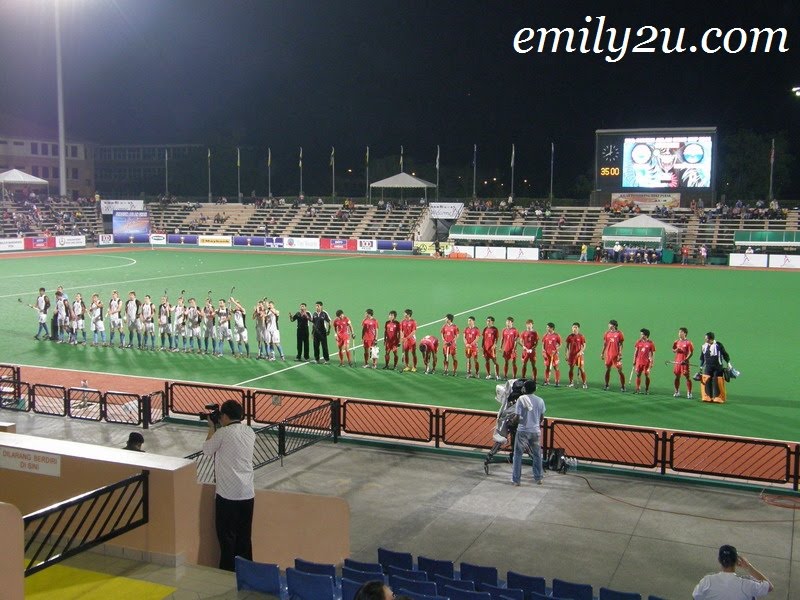
However, as the 32nd edition of the Sultan Azlan Shah (SAS) Cup gets underway in Ipoh from 20 November 2026, one familiar voice is noticeably missing.
Ashley is not part of this year’s commentary team. He has been diagnosed with Stage 4 lung cancer.
For someone who has spent years travelling to cover international hockey and sharing his passion for the sport with audiences, this is an unexpected and challenging turn of events.
In this interview, Ashley opens up about his diagnosis, his previous battle with cancer, his determination to fight once again, and his hopes of returning to the commentary box. He also reflects on his long association with the Sultan Azlan Shah Cup and shares his concerns about the tournament’s declining prominence in international hockey.
The man behind the mic
Ashley’s association with the Sultan Azlan Shah Cup began in 2010, when he was engaged by Astro SuperSport to provide commentary for the tournament.
His broadcasting career, however, started earlier. Asked when he first began working as a hockey commentator, Ashley recalls that it was sometime in the early 2000s, although he cannot remember the exact year.
Since then, he has covered almost every major international hockey tournament, including the Olympic Games, World Cups, Junior World Cups, Champions Trophies, Asian Games and Asian Cups.
The Sultan Azlan Shah Cup has been held annually since 1994, except for interruptions caused by the COVID-19 pandemic in 2020 and 2021. Ashley did not work at the 2022 and 2024 editions either, while there was no tournament in 2023. He returned in 2025.

Over the years, he has worked alongside fellow commentator Dez Corkhill, with several respected hockey personalities joining the coverage as expert analysts. They included Dharma Raj, Arul Antoni, Australian Olympic gold medallist Grant Schubert, Vikneswaran Iswarapatham and Logan Raj.
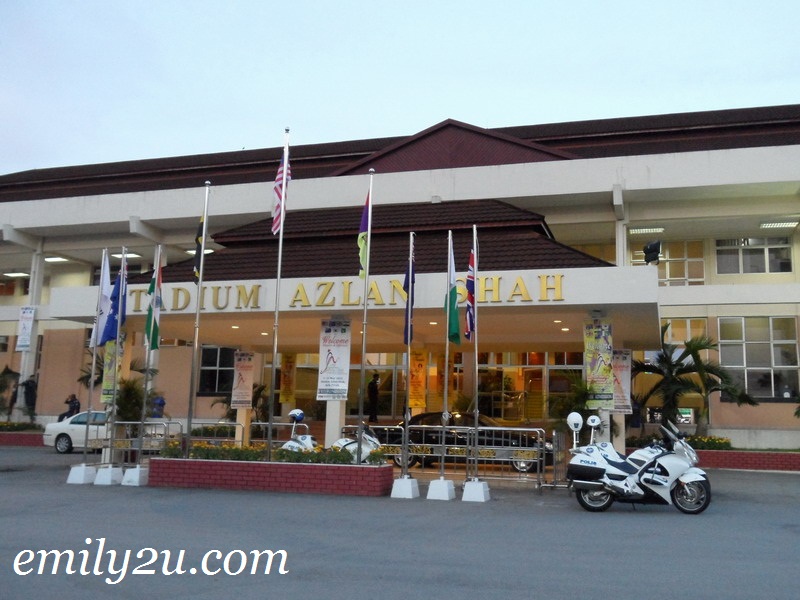
While local fans could catch the action live at Stadium Azlan Shah in Ipoh or tune in to Astro Arena, the excitement also reached hockey fans overseas. Astro had previously sold the tournament’s broadcast rights to television broadcasters in participating countries, allowing international audiences to watch the matches live on their local television channels. Unfortunately, this arrangement has become less common.
According to Ashley, many television stations are struggling financially and are no longer prepared to pay for the coverage. He also points out that hockey viewership has declined, making it increasingly difficult for the sport to attract wider audiences.
Ashley’s absence this year, however, has nothing to do with the changing broadcasting landscape. He is facing a personal battle.
Stage 4 lung cancer diagnosis
Some hockey fans may have noticed something unusual during Ashley’s commentary at the 2026 Junior Asian Cups in Inner Mongolia. His voice was struggling, but at the time, it was believed to be a persistent cough.
He was taking antibiotics, and neither he nor those around him initially suspected anything more serious.
However, following his return to Australia after covering the 2026 Aichi-Nagoya Asian Games in Japan, medical investigations revealed a devastating diagnosis. Ashley had fluid accumulating in his left lung and was subsequently diagnosed with Stage 4 lung cancer.
During the first 24 hours of hospital treatment, doctors drained approximately five and a half litres of fluid from his lung. His medical team subsequently identified the specific type of lung cancer, which Ashley described as one commonly found in non-smokers.
It is difficult to imagine how overwhelming such news must be, particularly when the initial symptoms appeared to be nothing more than a cough. Yet Ashley is determined to face this latest challenge with a positive outlook.
A second battle with cancer
This is not Ashley’s first encounter with cancer. Thirty-one years ago, he was diagnosed with testicular cancer. He later documented his experience in a book titled Please Sir, Can I Have My Ball Back?, published in 2005.
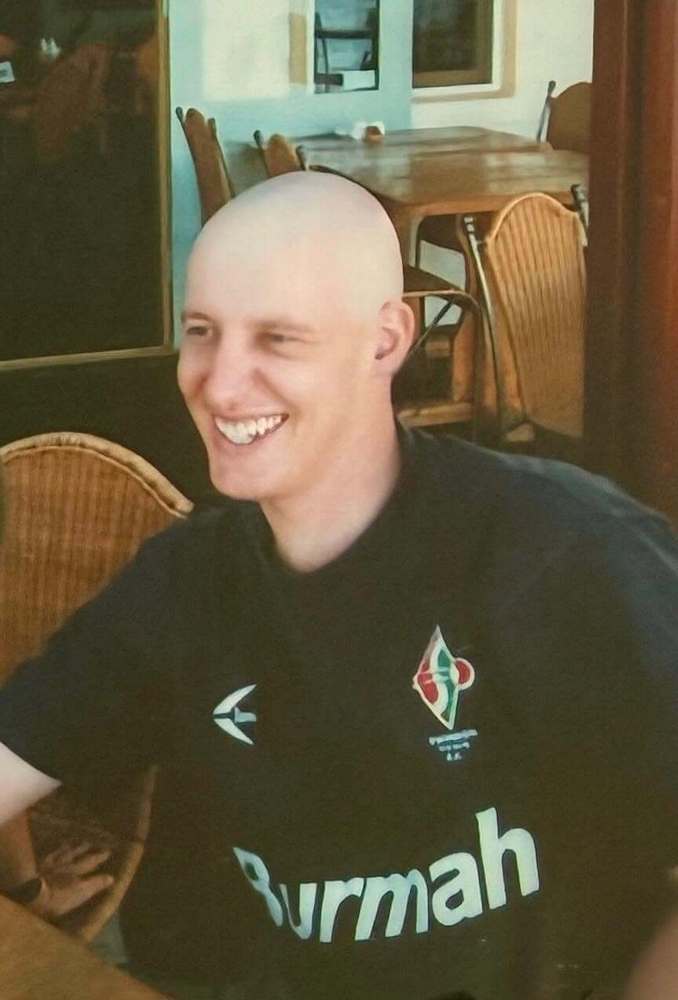
More than three decades have passed since that first battle, and Ashley recognises that cancer treatment has advanced considerably during that time. He is particularly encouraged by the more targeted approach to treatment, which is now tailored to different types of cancer.
While he remains realistic about the challenges ahead, he is doing what he can to prepare himself physically and mentally. An exercise programme is being put together to help him maintain muscle mass during treatment, while staying positive remains an important part of his approach.
“I believe that I can beat this again,” he says. Those are powerful words from someone who has already experienced the challenges of cancer treatment and now finds himself facing another fight.
Determined to return to the commentary box
Despite his diagnosis, Ashley has not given up on his professional ambitions. He has already set himself targets for when he hopes to return to commentary. Naturally, much will depend on how he responds to treatment, but he is looking ahead rather than dwelling on what he cannot do at present.
He also hopes to have the opportunity to work with organisations and broadcasters who have engaged him in the past.

Born and raised in England, Ashley moved to Australia when he was 23. Asked whether he considers himself British or Australian, he admits that it is not an easy question to answer. He feels that both countries have influenced him, although he probably leans more towards being Australian these days. There is one exception, however: cricket!
Ashley’s professional profile is varied. While he is comfortable being described as a sports broadcaster, writer or producer, he prefers to be recognised as a sports broadcaster, author and award-winning documentary filmmaker. He carries out these roles through his own company, Ashley Morrison Media.
Ashley Morrison, the award-winning documentary filmmaker
Beyond the commentary box, Ashley has built an impressive body of work as a documentary filmmaker, telling stories that go beyond the sporting arena. His films have explored sporting achievements, personal struggles, history and remarkable individuals, and have earned recognition at film festivals in various parts of the world.
Here are some of his documentary projects and the awards they have received.
This documentary looks at the 2010 FIFA World Cup and won the Audience Choice Award at the African World Documentary Film Festival in 2013.
The film focuses on the 2011 FIFA Women’s World Cup and two Aboriginal girls who played for Australia.
It received two awards at the Southampton International Film Festival: Best Documentary and Best Editing in a Documentary. It also received a Gold Award for Best Asia-Pacific Documentary at the Documentary and Short International Movie Awards in 2013.
This documentary tells the remarkable story of three Irish rugby players from the same club who all went on to represent Ireland and receive the Victoria Cross, the highest award for valour.
The film received several awards in 2022 and 2023:
* Best Documentary at the MoviePlay International Film Festival in October 2022.
* Best Documentary at the EdiPlay International Film Festival in November 2022.
* Best Sport Short Film at the Calgary Independent Film Festival in November 2022.
* Best War Film at the Dublin Movie Awards in February 2023.
This documentary tells the story of Africa’s first boxing World Champion, who was left to die on a New York street at just 28 years old.
It won Best Documentary at the 2024 Harlem International Film Festival and Best Documentary Film at the 2024 BCN Sports Film Festival.
The film tells the story of Vera Čáslavská, the celebrated Czech gymnast whose silent protest at the 1968 Olympic Games changed her life and made her a hero in her homeland. Through the documentary, Ashley also hopes to bring greater attention to her sporting achievements and courageous stand.
The film has received recognition at several international festivals:
* Best Biographical Film at the California Women Film Festival in November 2025.
* Recognition of Honour (Documentary) in the Czech Republic in September 2025.
* Mention d’honneur – Olympic and Paralympic Spirit (Feature) in Italy in October 2025.
* Best Non-Fiction Film Award at the International Sports Film Festival of India (ISFFI) in February 2026.
* Best Australian Film at the Hollywood Indie Film Festival in April 2026.
These projects reflect another important side of Ashley’s career. While hockey commentary has made him a familiar voice to sports fans, his documentaries have allowed him to bring lesser-known stories and extraordinary sporting lives to a wider audience.
The changing fortunes of the Sultan Azlan Shah Cup
Beyond his personal health journey, Ashley has some candid observations about the tournament that has played such a significant role in his broadcasting career.
He is saddened to see the Sultan Azlan Shah Cup losing some of its lustre since the pandemic. Named in honour of the late Sultan Azlan Shah, who was also a former President of the Asian Hockey Federation, the prestigious invitational tournament has long been an important fixture in international hockey.

However, Ashley believes its position in the international calendar has been affected by the introduction of the FIH Pro League.
Traditionally held in March or April, the Sultan Azlan Shah Cup was moved to November, in the middle of the monsoon season, following the introduction of the Pro League. The change in timing, he feels, has made it more difficult for the tournament to attract the same attention it once enjoyed.
Another significant issue was the initial restriction preventing Pro League teams from playing one another outside the competition. Consequently, many of the top hockey nations stopped participating in the Sultan Azlan Shah Cup.
Ashley considers this a great shame, as the absence of several leading teams has affected not only the tournament’s appeal but also opportunities for hockey development in Asia.
He believes Malaysia has been one of the region’s key supporters of the sport and that competitions such as the Sultan Azlan Shah Cup remain important to the wider development of Asian hockey.
His hope is that the tournament can eventually regain its former prestige instead of being squeezed into the international calendar towards the end of the year.
Not merely an international hockey tournament
For Ashley, the Sultan Azlan Shah Cup has always served a purpose beyond bringing established international teams together.
He particularly values the opportunities it provides for coaches to introduce promising young players to international competition. The tournament has traditionally offered a useful platform for emerging talent to make their international debuts, test their abilities and gain experience against quality opposition.
This is important because young players need opportunities to experience international hockey without immediately being thrown into major tournaments where the pressure and expectations are considerably higher.
Such exposure can help coaches assess their players’ readiness while allowing the players themselves to develop confidence and learn from competing against more experienced opponents.
It is one of the reasons Ashley has such fond memories of being involved in the tournament. “The Sultan Azlan Shah Cup plays a vital role in Malaysian hockey and also hockey in Asia,” he says.
He hopes the competition can once again attract stronger participation and reclaim the standing it enjoyed in the past. More importantly, he hopes it will continue contributing to the development of hockey across the region.
The voice we want to hear again
This year’s participating nations are Australia (World No. 3), Pakistan (No. 12), Canada (No. 19), Korea (No. 20), the United States (No. 26) and hosts Malaysia (No. 14).
For Ashley, however, his connection with the tournament goes beyond the matches, the teams and the commentary assignments. His reflections also serve as a reminder that the Sultan Azlan Shah Cup deserves continued support and a more prominent place in the international hockey calendar.
For now, Ashley’s priority is his health and the treatment ahead. His determination to overcome cancer, coupled with his goal to return to broadcasting, offers a glimpse of the fighting spirit that has carried him through difficult times before.
Here is wishing Ashley strength and courage as he takes on this latest battle. We are looking forward to the day when hockey fans once again hear that familiar voice from the commentary box at the Sultan Azlan Shah Cup, bringing the excitement of international hockey to audiences around the world.